Casa Adelante
San Francisco, California
Completed in 2020
Affordable Housing Rooted in Community
A Decade of Advocacy, Realized in Steel and Concrete
Some buildings take years to design. This one took closer to two decades to become possible.
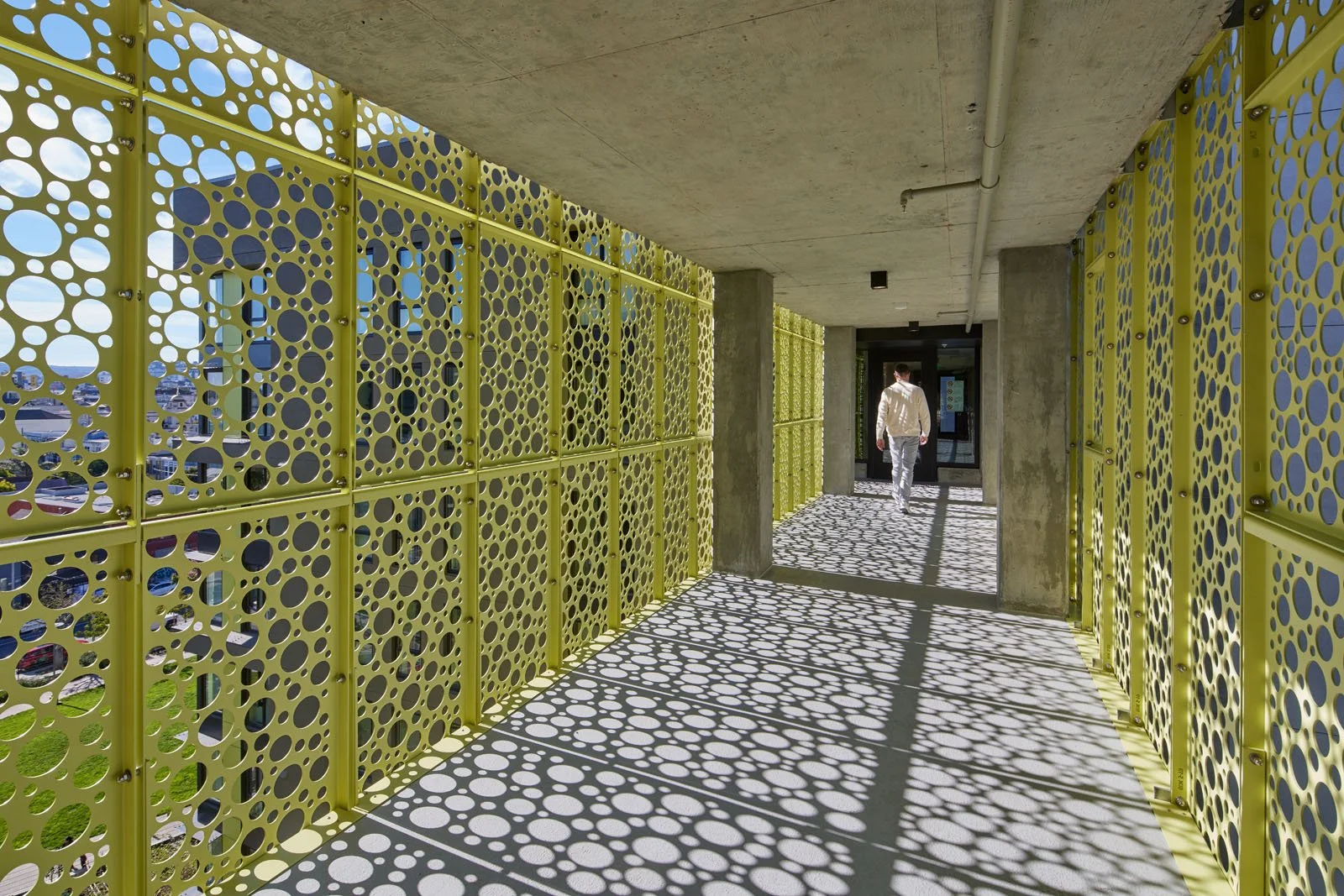
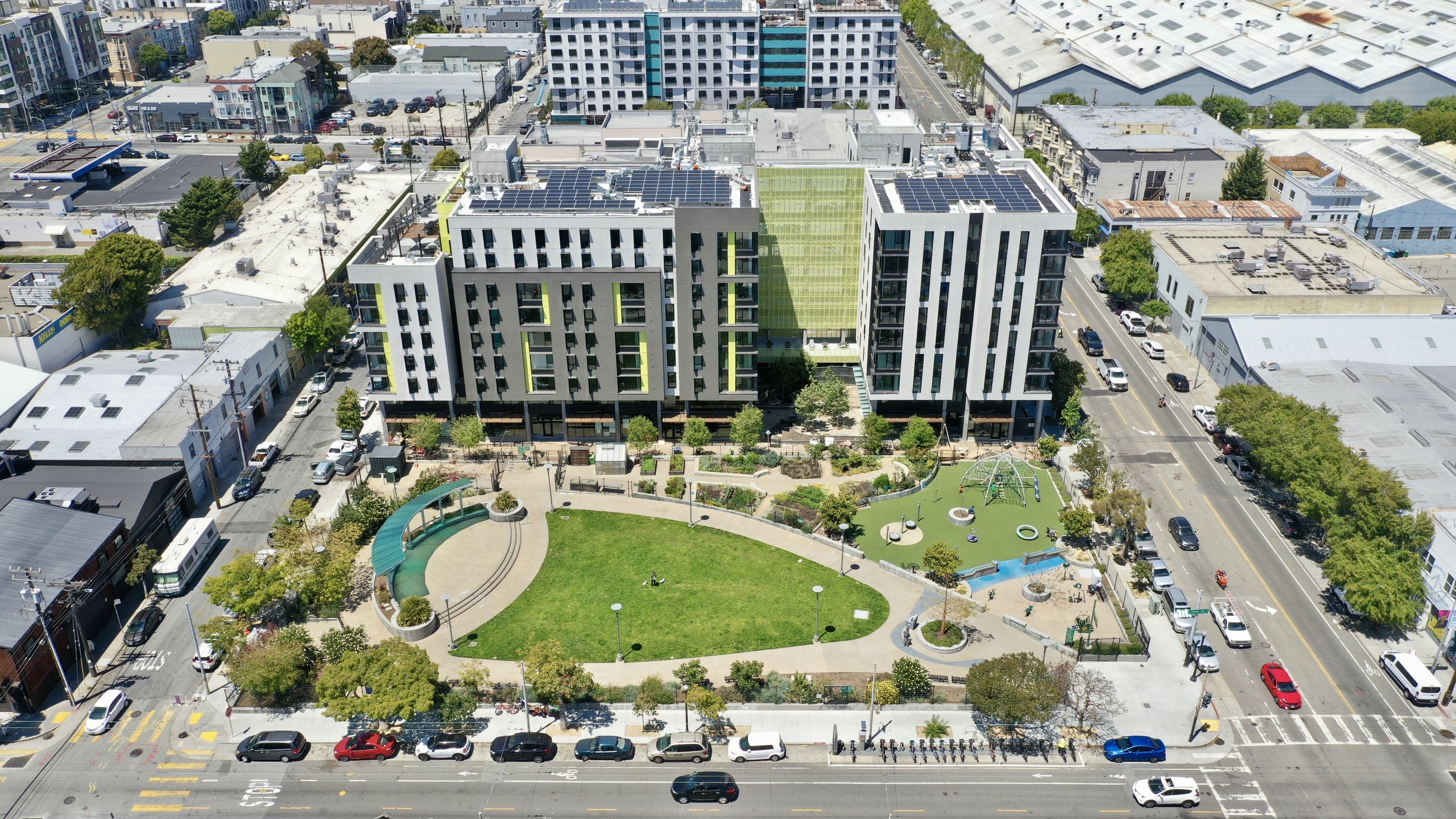
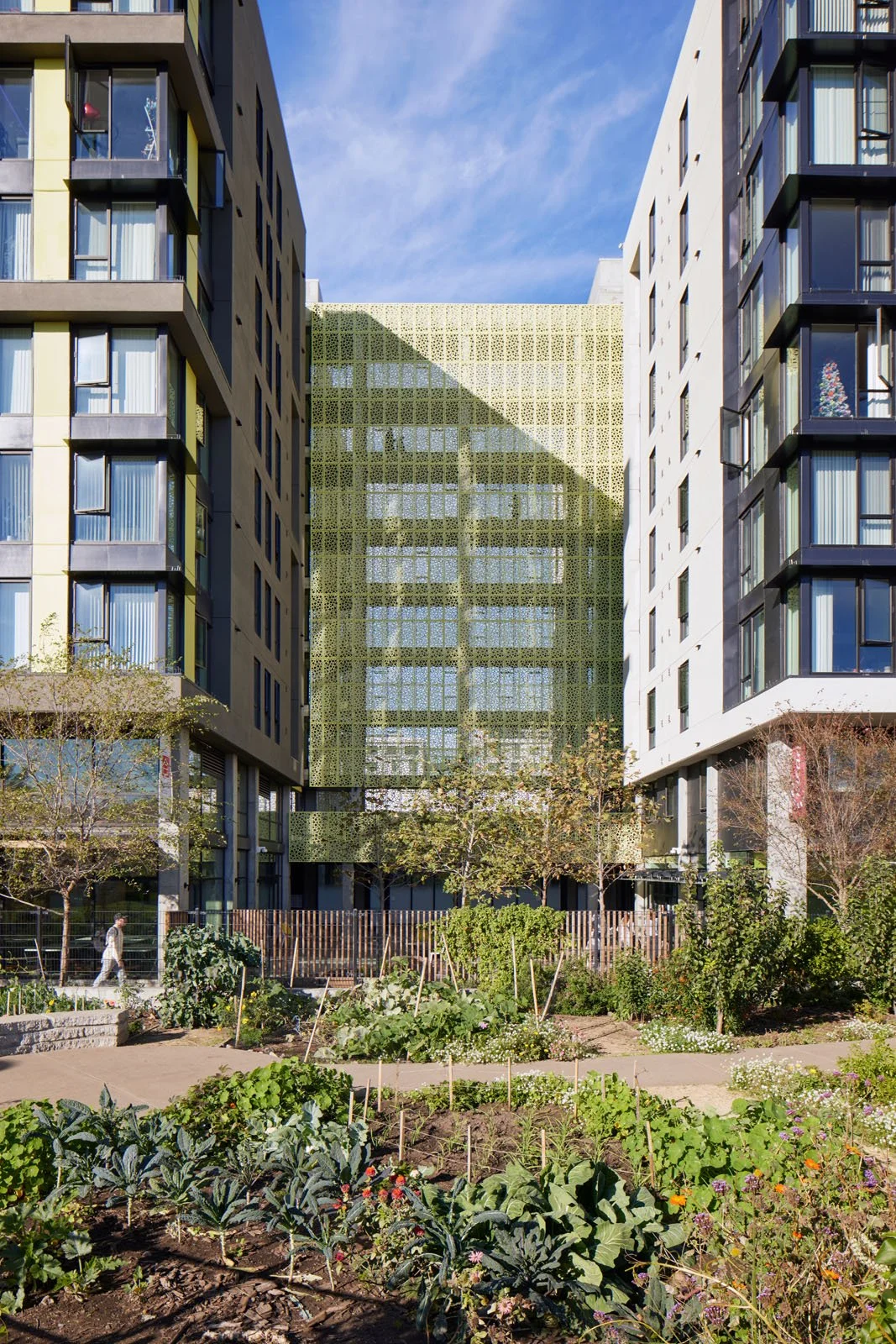
Casa Adelante at 2060 Folsom Street stands in San Francisco's Mission District as a nine-story, 127-home affordable housing development, and as a testament to what sustained community organizing can produce when paired with design and development partners who genuinely listen. The site itself had been an SFPUC-managed parking lot. Through years of advocacy by neighborhood organizations, including the environmental justice group PODER, the City transferred that land toward public benefit: a new park, In Chan Kaajal, and the housing development adjacent to it. Y.A. studio served as the associate architect on the project, working alongside the architect of record, Mithun, and the co-developers, Chinatown CDC and MEDA.
The result is a building that doesn't just provide shelter — it anchors a community.
Designing for the Neighborhood, Not Just the Site
The design process for Casa Adelante was built around community engagement from the start. The project team conducted numerous listening sessions and multiple public meetings, held in both English and Spanish, to ensure that the voices of Mission District residents, community organizations, and local place-keepers shaped the building's program and character.
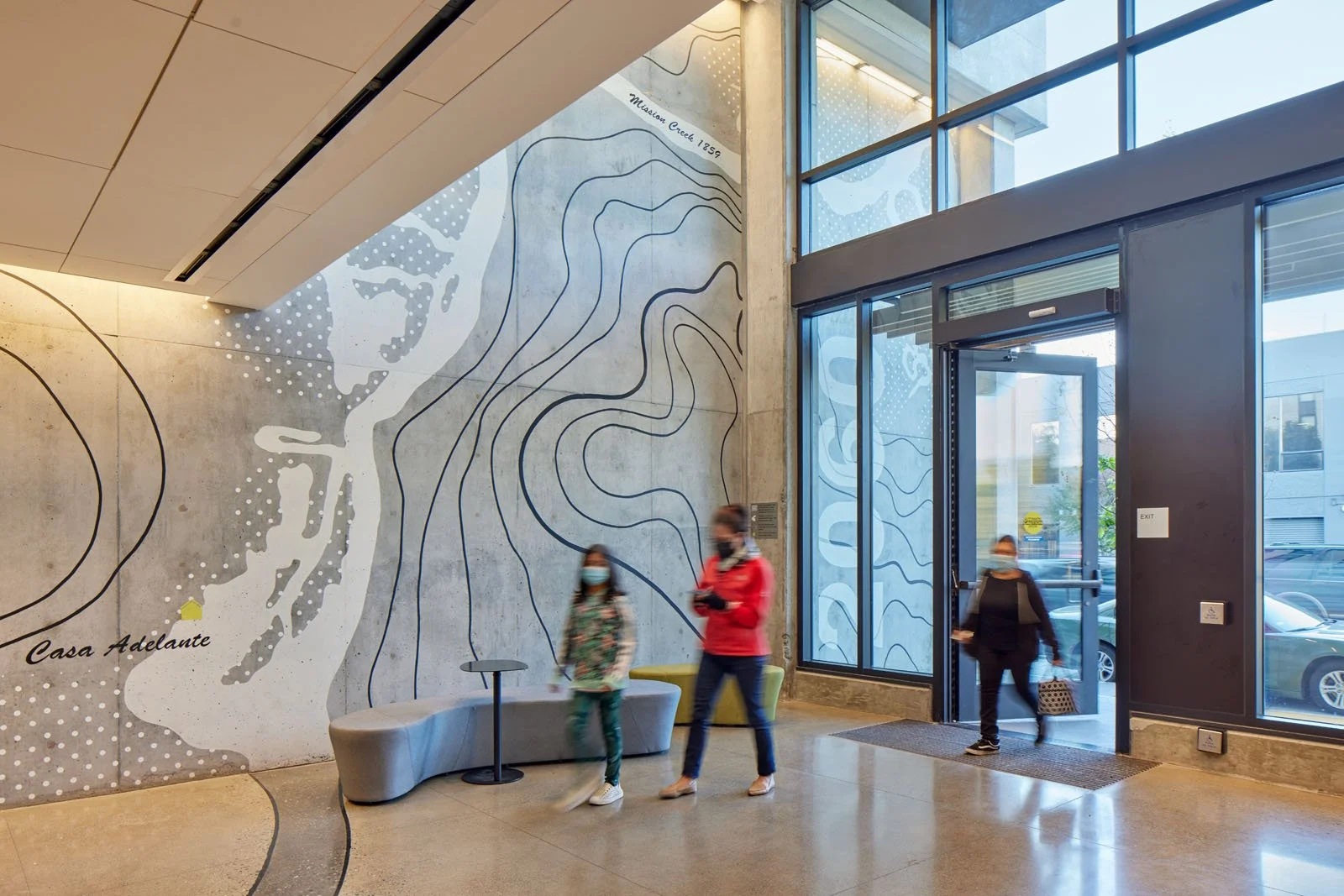
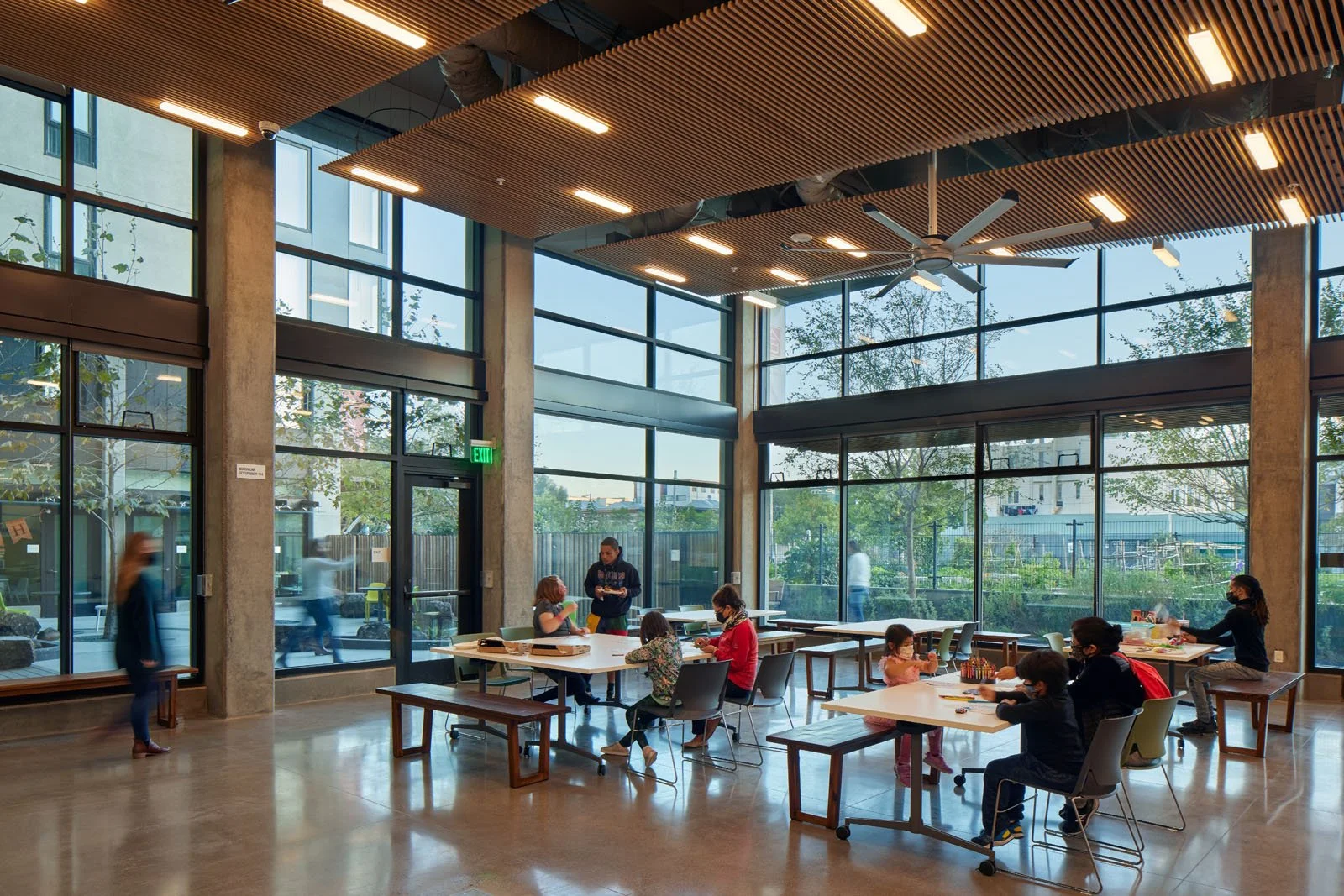
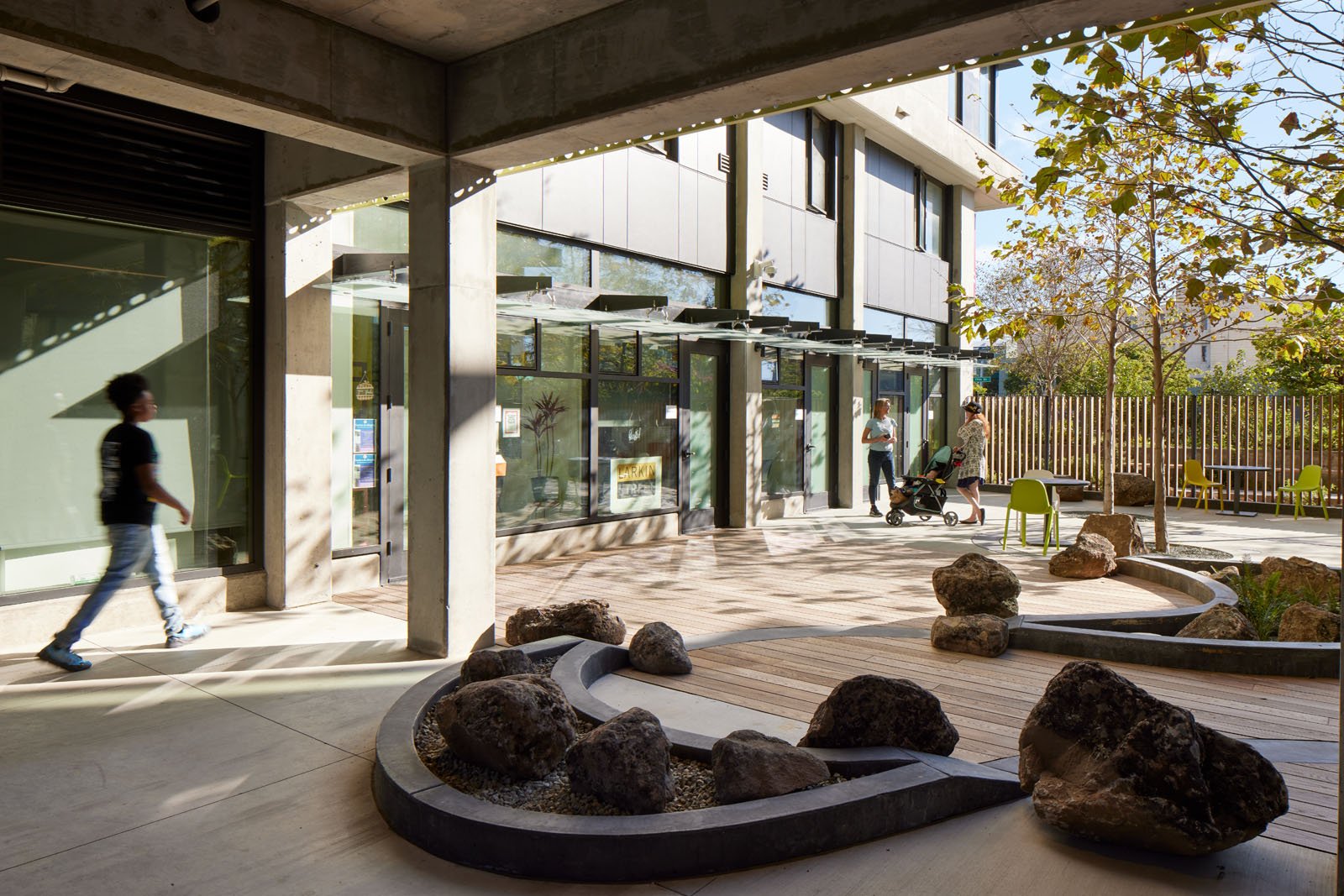
That input is visible in the outcome. The ground floor houses four community-serving organizations: PODER, Youth Speaks, First Exposures, and Good Samaritan Family Resource Center. A publicly accessible paseo runs along the building's edge, connecting surrounding streets to In Chan Kaajal Park. The building doesn't turn its back on the neighborhood; it opens toward it.
Housing for Families and Youth at the Threshold
Of the building's 127 homes, 29 are designated for transition-age youth (TAY) — young people between 18 and 24 who are navigating the critical years between foster care or homelessness and independent adulthood. These units are supported by operating subsidies and onsite services provided through a partnership with Larkin Street Youth Services. The remaining units serve families across a range of income levels, with deep affordability targeting throughout.
At the grand opening, the building was fully occupied — 127 households with stable, affordable homes in one of San Francisco's most pressured neighborhoods.
All-Electric, All-In on Resilience
San Francisco's First Large All-Electric Multifamily Building
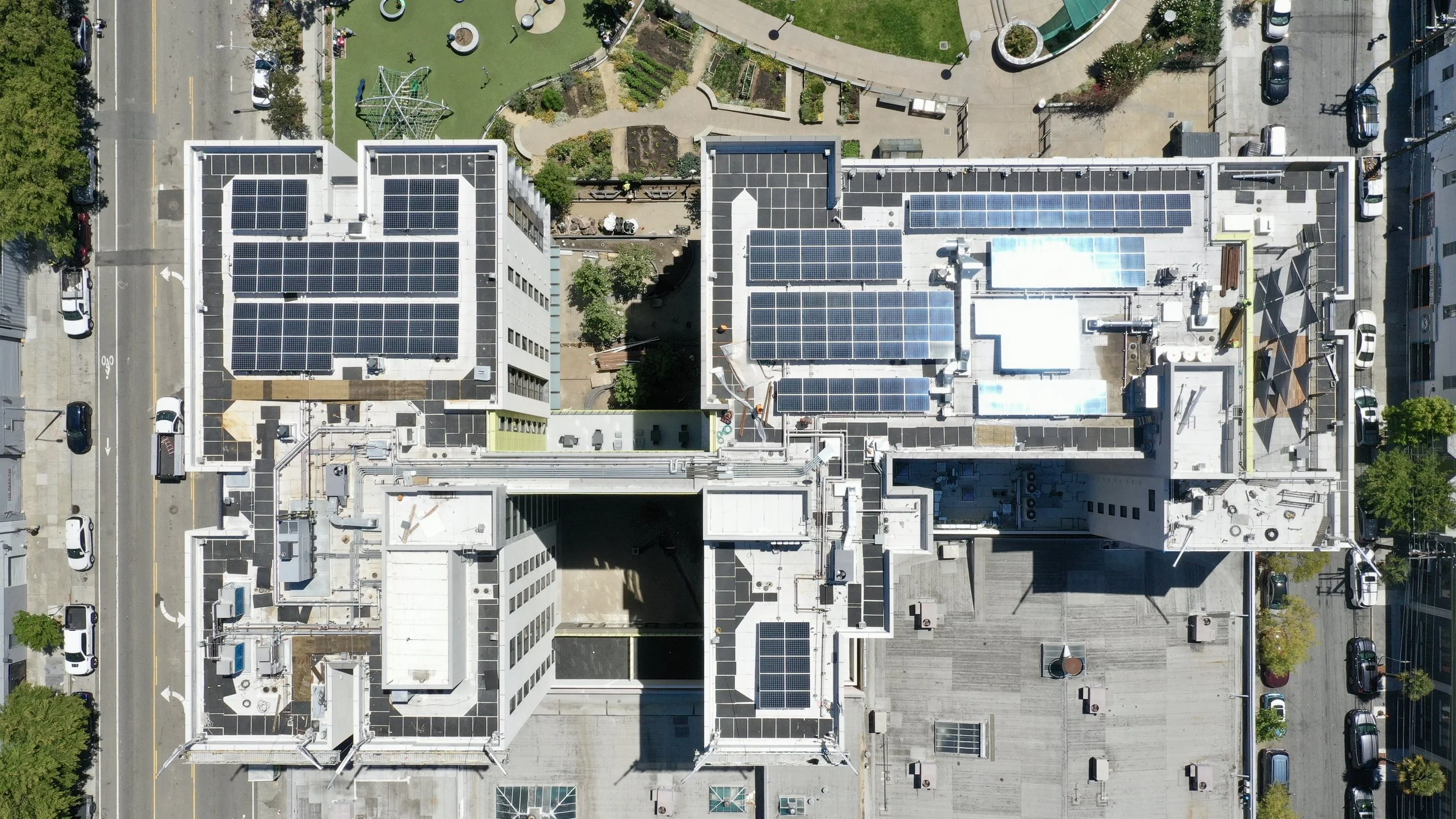
Casa Adelante made history as San Francisco's first large all-electric multifamily affordable housing project. In an era when most affordable housing still relies on natural gas for cooking and heating, the project team chose to go fully electric — a decision that required careful coordination across engineering, construction, and financing systems that weren't yet designed to work this way.
The building's mechanical strategy centers on health and resilience as much as carbon reduction. Heat recovery ventilators and MERV 13 filtration provide continuous fresh air to all units, which is meaningful for residents in an urban neighborhood where outdoor air quality is variable. Backup power systems protect key building functions during outages. The building was designed not just for today's climate, but for the conditions residents will face decades from now.
Smart Structural Decisions Under Real Constraints
Midway through design development, the project team made a significant move: they shifted to all-concrete construction and added three stories and 26 additional units — at the same per-unit cost. It's the kind of decision that requires intense coordination between design, engineering, and ownership, and it demonstrates what's possible when a team is aligned around outcomes rather than defaults.
The building also responds to its specific site conditions. Located in a low-lying area with a high water table and sewer infrastructure challenges, the design elevates key building systems above grade — a concrete example of resilience-informed design that protects long-term operations and resident quality of life.
Recognition and Broader Impact
AIA COTE Top Ten Honoree
In 2023, Casa Adelante received AIA Committee on the Environment (COTE) Top Ten recognition — one of the architecture profession's most rigorous sustainability distinctions. The award acknowledged the project as a model for low-carbon, equity-focused affordable housing and positioned it as a replicable framework for the sector.
That recognition matters beyond the award itself. As cities across California and the country grapple with how to build affordable housing that is also environmentally responsible, Casa Adelante offers documented proof of concept: all-electric systems, community-driven programming, and financial structures that work within the constraints of public subsidy. The project's capital stack combined state Affordable Housing and Sustainable Communities (AHSC) funding, federal Low-Income Housing Tax Credits, tax-exempt bonds, and a significant local subsidy from the City's Mayor's Office of Housing and Community Development.
What This Project Means for Y.A. studio
Casa Adelante represents the kind of work Y.A. studio was built to do — complex, community-rooted, technically demanding housing that asks design to serve multiple masters at once: affordability, sustainability, cultural specificity, and long-term resilience. As an associate architect, Y.A. studio contributed to a project that is already shaping how San Francisco and the broader affordable housing field think about what's possible.
The building at 2060 Folsom is fully occupied. The community organizations are open. The paseo is active. And the standard it set for all-electric affordable housing in San Francisco continues to raise the bar.